
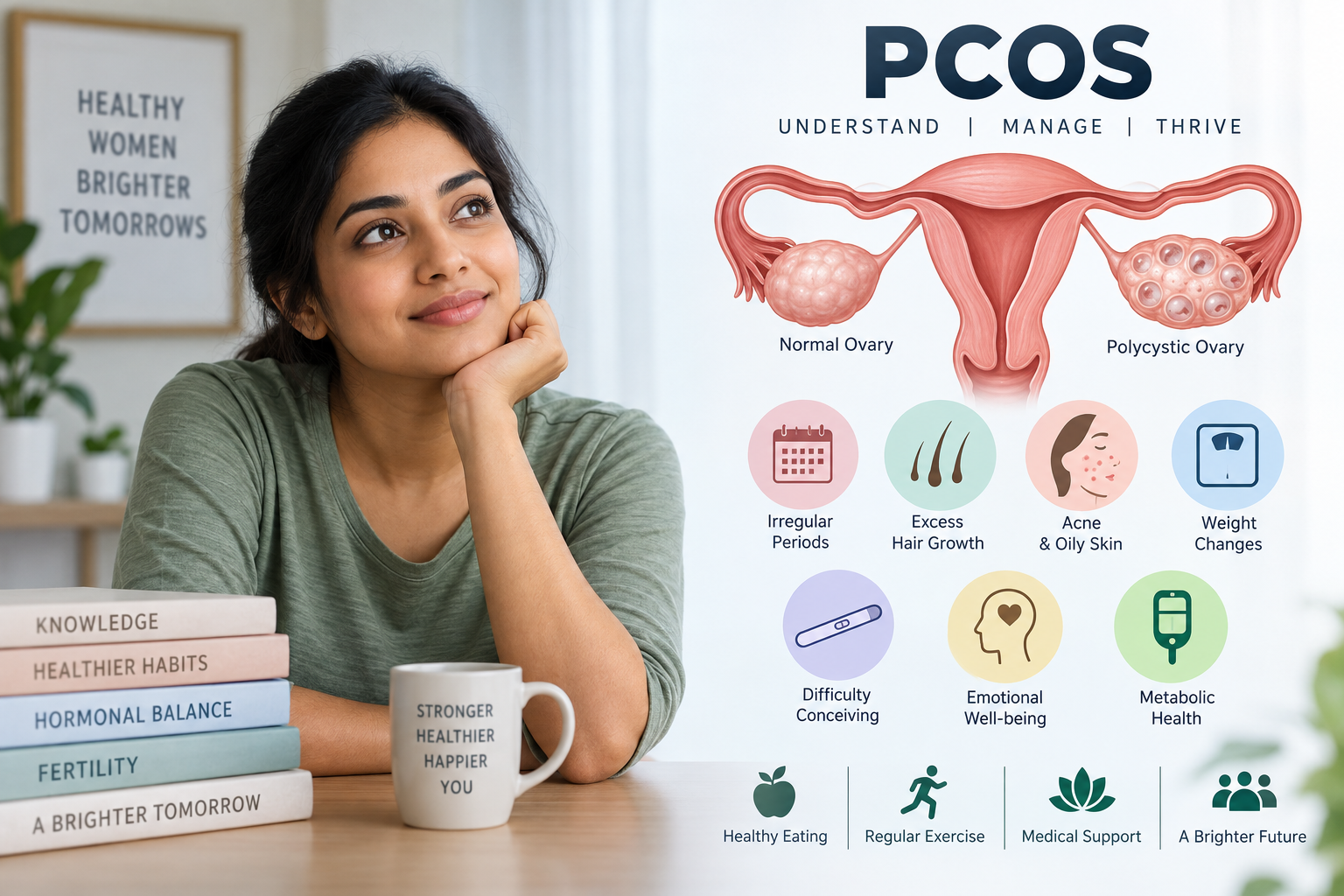
Polycystic Ovary Syndrome (PCOS) is one of the most common hormonal conditions affecting women of reproductive age. It can influence menstrual cycles, ovulation, skin, hair, weight, metabolism and fertility. Despite being common, PCOS is often misunderstood.
A diagnosis of PCOS does not mean that a woman cannot become pregnant, nor does it mean that she will always have irregular periods or develop ovarian cysts. PCOS is a long-term hormonal and metabolic condition, but with the right approach, it can be effectively managed.
What is PCOS?
PCOS is a condition in which there is a combination of hormonal imbalance, irregular or absent ovulation and, in many women, features of increased androgen (male hormone) activity.
The name "polycystic ovary syndrome" can sometimes be misleading. Not every woman with PCOS has polycystic-appearing ovaries on an ultrasound, and having polycystic-appearing ovaries alone does not mean that a woman has PCOS.
PCOS may present differently from one woman to another. Some women primarily experience irregular periods, while others may seek medical advice because of acne, unwanted facial hair, weight gain or difficulty conceiving.
What are the symptoms of PCOS?
Common symptoms include:
- Irregular, delayed or absent periods
- Difficulty predicting ovulation
- Difficulty becoming pregnant
- Excess facial or body hair
- Acne or oily skin
- Hair thinning or increased hair fall from the scalp
- Weight gain or difficulty losing weight
- Darkening of the skin, particularly around the neck or folds, in some women
Not every woman will experience all these symptoms. Some women may have PCOS with a normal body weight, while others may have significant insulin resistance or weight-related metabolic problems. Therefore, PCOS should never be judged by appearance or body weight alone.
Why does PCOS happen?
There is no single cause of PCOS. It is thought to result from a combination of genetic, hormonal and metabolic factors.
Insulin resistance is common in PCOS. Insulin is a hormone that helps the body use glucose for energy. When the body becomes less responsive to insulin, the pancreas may produce more insulin. Higher insulin levels can contribute to increased androgen production in the ovaries and interfere with normal ovulation.
This can create a cycle of hormonal imbalance, irregular ovulation and menstrual irregularity. Family history also plays a role. Women with a mother or sister who has PCOS may have a higher likelihood of developing the condition.
Does PCOS cause infertility?
PCOS is one of the most common causes of ovulatory infertility, but it is important to remember that PCOS does not mean permanent infertility.
The main issue is often that ovulation does not occur regularly. If ovulation is restored or appropriately induced, many women with PCOS can conceive naturally or with relatively simple fertility treatments.
Treatment depends on the woman's age, duration of infertility, ovarian reserve, partner's semen parameters and other fertility factors. For women with PCOS who are trying to conceive, lifestyle optimisation and appropriate ovulation-induction treatment can be highly effective. In selected cases, further treatments such as intrauterine insemination (IUI) or IVF may be recommended.
How is PCOS diagnosed?
There is no single blood test that can diagnose PCOS. Doctors generally consider a combination of menstrual history, symptoms, physical examination, blood tests and, when appropriate, an ultrasound scan.
In adults, the diagnosis is commonly based on the presence of at least two of the following features after excluding other possible causes:
- Irregular or absent ovulation, usually reflected by irregular menstrual cycles.
- Clinical or biochemical evidence of increased androgen activity.
- Polycystic ovarian morphology on ultrasound or, in appropriate circumstances, other validated ovarian assessment.
Other hormonal or medical conditions that can cause similar symptoms may need to be excluded before confirming the diagnosis. The diagnostic approach is different in adolescents, because irregular cycles and acne can be normal during the early years after puberty.
Can PCOS be cured?
PCOS is generally considered a long-term condition rather than something that can be permanently "cured" with one medication. However, PCOS can be very effectively managed.
Treatment is tailored to the woman's goals. Someone who is not currently trying to conceive may need treatment focused on menstrual regulation, acne, unwanted hair growth and protection of the uterine lining. A woman trying to become pregnant will have a different treatment plan.
Lifestyle changes are an important part of treatment
Healthy lifestyle habits are an important component of PCOS management, particularly when insulin resistance or excess weight is present.
Regular physical activity can improve insulin sensitivity and metabolic health. A combination of aerobic exercise and resistance training can be beneficial.
A balanced diet is more important than following a highly restrictive "PCOS diet." Focus on vegetables, fruits, whole grains, adequate protein, healthy fats and minimally processed foods. Reducing excessive intake of refined carbohydrates, sugary beverages and highly processed foods can be helpful.
For women who are overweight, even a modest and sustainable reduction in body weight can improve metabolic health and, in some women, menstrual regularity and ovulation. Importantly, women with PCOS who are not overweight also benefit from healthy eating and regular exercise. Lifestyle management is about improving overall health, not simply losing weight.
Treatment depends on your goals
There is no single treatment that is appropriate for every woman with PCOS.
For women who are not trying to become pregnant, hormonal contraceptive pills may be prescribed to regulate bleeding, reduce androgen-related symptoms and protect the endometrium. Other medications may be considered for acne or unwanted hair growth.
If periods are very infrequent, treatment may be necessary to protect the lining of the uterus from prolonged exposure to unopposed estrogen.
For women trying to conceive, treatment focuses on restoring ovulation. Letrozole is generally considered the first-line medication for ovulation induction in women with PCOS-related anovulatory infertility when there are no other infertility factors.
Metformin may be useful in selected women, particularly when there are metabolic indications or insulin resistance, but it is not a universal treatment for every woman with PCOS.
PCOS and long-term health
PCOS is not only a reproductive condition. Some women with PCOS have an increased risk of insulin resistance, prediabetes, type 2 diabetes, abnormal cholesterol levels, high blood pressure and other metabolic problems.
Mental health should also not be overlooked. Anxiety, depression, body-image concerns and eating difficulties may occur more frequently in women with PCOS. Regular medical follow-up can help identify and manage these risks early.
When should you see a doctor?
You should consider consulting a gynaecologist if you have:
- Periods that are consistently irregular or absent
- Excess facial or body hair
- Persistent acne
- Unexplained hair thinning
- Difficulty becoming pregnant
- Significant or unexplained weight changes
- Symptoms suggestive of insulin resistance or metabolic problems
It is particularly important not to ignore very infrequent periods. Long gaps between periods can sometimes require treatment to protect the uterine lining.
Living well with PCOS
A diagnosis of PCOS can initially feel overwhelming, especially when it is associated with concerns about fertility, weight or appearance. But PCOS is manageable, and treatment can be personalised to your symptoms, health needs and reproductive goals.
The most important step is to avoid self-diagnosis based on an ultrasound report or a single hormone test. PCOS is a clinical diagnosis that requires proper evaluation. With appropriate medical care, healthy lifestyle habits and regular follow-up, most women with PCOS can lead healthy lives and, when they wish to have children, many can achieve a successful pregnancy.
If you have irregular periods, symptoms of hormonal imbalance or concerns about fertility, speak to a qualified gynaecologist for an individualised assessment and treatment plan.
To book a consultation with our experts in Sholinganallur, please click here to request an appointment.