
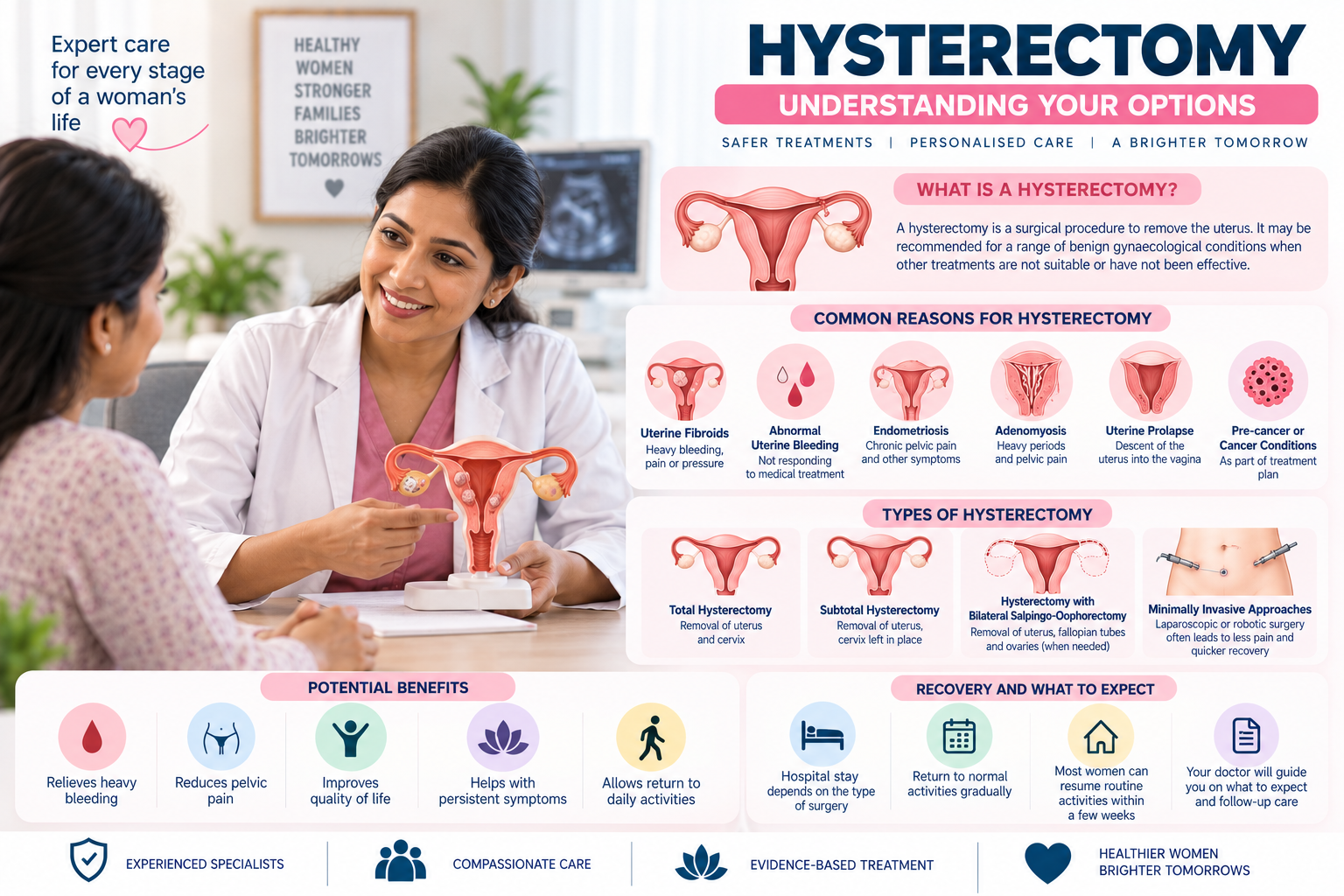
Being advised to undergo a hysterectomy can raise many questions. Why is surgery necessary? Are there alternatives? Will it affect hormones? How long will recovery take?
A hysterectomy is a commonly performed gynaecological operation that can provide lasting relief for women with certain uterine conditions. However, it is a major surgical procedure, and understanding its benefits, risks and alternatives is an important part of making an informed decision.
If your gynaecologist has recommended a hysterectomy, this guide will help you understand what the procedure involves and what to expect before and after surgery.
What Is a Hysterectomy?
A hysterectomy is a surgical procedure to remove the uterus, also called the womb. The uterus is the organ in which a baby develops during pregnancy.
After a hysterectomy, you will no longer have menstrual periods and will not be able to carry a pregnancy.
Depending on the underlying condition, your surgeon may recommend removing only the uterus or removing additional reproductive organs, such as the cervix, fallopian tubes or ovaries. The exact procedure depends on your diagnosis, age, symptoms, medical history and personal preferences.
Why Is a Hysterectomy Performed?
A hysterectomy may be recommended when a uterine condition causes significant symptoms, affects quality of life or requires definitive treatment. Common reasons include:
1. Uterine Fibroids
Fibroids are non-cancerous growths in the muscular wall of the uterus. They may cause heavy menstrual bleeding, pelvic pressure, pain or an enlarged abdomen. When fibroids cause severe symptoms and other treatments are unsuitable or unsuccessful, hysterectomy may be considered. Women who wish to preserve their ability to become pregnant may have other options, including myomectomy.
2. Heavy or Abnormal Uterine Bleeding
Persistent heavy menstrual bleeding can lead to anaemia, fatigue and disruption of daily activities. Treatment depends on the cause and may include medication, hormonal treatment, an intrauterine system or other procedures. Hysterectomy may be an option when symptoms remain severe despite appropriate treatment and future pregnancy is not desired.
3. Endometriosis and Adenomyosis
Endometriosis occurs when tissue similar to the uterine lining grows outside the uterus. Adenomyosis occurs when similar tissue is present within the muscular wall of the uterus. Both conditions may cause painful periods, pelvic pain and other symptoms.
Hysterectomy may help selected women with adenomyosis or persistent symptoms associated with uterine disease. However, it does not guarantee relief from all pelvic pain, particularly when endometriosis affects other structures.
4. Uterine Prolapse
Uterine prolapse occurs when the uterus descends into the vagina because of weakness in the pelvic support structures. Depending on the severity of prolapse, treatment may include pelvic floor physiotherapy, a vaginal pessary or surgery. Hysterectomy may form part of a surgical treatment plan, although uterus-preserving procedures may also be appropriate for selected women.
5. Cancer or Precancerous Conditions
Hysterectomy may be recommended for certain cancers of the uterus or cervix, and for selected precancerous conditions when indicated. The type of surgery and whether additional treatment is required depend on the diagnosis and stage of disease.
What Are the Different Types of Hysterectomy?
The term hysterectomy describes several different procedures.
- Total hysterectomy involves removing the uterus and cervix.
- Subtotal or supracervical hysterectomy involves removing the main body of the uterus while leaving the cervix in place. Cervical screening may still be necessary according to applicable guidelines and your medical history.
- Radical hysterectomy involves removing the uterus, cervix and surrounding tissues and is used in selected cancer cases.
Your surgeon may also recommend removing the fallopian tubes or ovaries, depending on the clinical situation. These decisions should be discussed carefully because removal of the ovaries has important hormonal consequences.
How Is a Hysterectomy Performed?
There are several surgical approaches, and the most appropriate one depends on the size of the uterus, the underlying condition, previous surgeries and other medical factors.
- Vaginal hysterectomy involves removing the uterus through the vagina without an abdominal incision. It may be suitable for selected women, particularly those with uterine prolapse.
- Laparoscopic hysterectomy uses small abdominal incisions, a camera and specialised instruments to remove the uterus. Recovery may be quicker than after open abdominal surgery for suitable patients.
- Robotic-assisted hysterectomy uses robotic surgical instruments controlled by the surgeon. Availability and suitability vary.
- Abdominal hysterectomy involves removing the uterus through an incision in the abdomen. It may be necessary in certain complex cases or when minimally invasive approaches are unsuitable.
Your gynaecologist will explain which approach is appropriate and why.
What Happens Before Surgery?
Before a hysterectomy, your doctor will review your symptoms, medical history, medications and previous treatments.
You may need a pelvic examination, ultrasound, blood tests and additional investigations depending on the reason for surgery. If abnormal bleeding is being investigated, assessment of the uterine lining may also be necessary.
Your surgeon should discuss the expected benefits, potential complications, alternatives and implications for fertility. If you may wish to have children in the future, this must be discussed before surgery because hysterectomy permanently removes the ability to carry a pregnancy.
You will also receive instructions about fasting, medication adjustments and preparation for admission.
What Is Recovery Like After a Hysterectomy?
Recovery varies according to the surgical approach, your general health and whether complications occur.
After surgery, you may experience tiredness, mild abdominal discomfort and temporary changes in bowel or bladder function. Your medical team will advise you on pain relief, wound care, mobility and prevention of blood clots. Hospital stay depends on the type of surgery and your recovery.
Women who undergo minimally invasive or vaginal hysterectomy may return to routine activities sooner than those undergoing open abdominal surgery. Recovery after abdominal hysterectomy often takes several weeks, commonly around six to eight weeks, although individual recovery times vary.
You should gradually increase activity and follow your surgeon's instructions about lifting, exercise, driving, work and sexual activity.
Seek urgent medical attention if you experience heavy bleeding, fever, worsening abdominal pain, difficulty breathing, chest pain, or a painful swollen leg.
Will a Hysterectomy Cause Menopause?
Removing the uterus does not automatically cause menopause if the ovaries are retained.
The ovaries produce hormones, including estrogen and progesterone. If both ovaries are removed before natural menopause, surgical menopause occurs and may cause hot flushes, night sweats, sleep disturbance, vaginal dryness and other symptoms.
The decision to remove or preserve the ovaries depends on your age, diagnosis, family history, cancer risk and individual circumstances. Your doctor should explain the hormonal implications before surgery.
Are There Alternatives to Hysterectomy?
In many situations, alternatives may be available. Depending on the condition, these may include medication, hormonal treatment, a levonorgestrel-releasing intrauterine system, endometrial ablation, myomectomy, uterine artery embolisation, pelvic floor physiotherapy or prolapse surgery that preserves the uterus.
Not every alternative is suitable for every patient. The best choice depends on the diagnosis, severity of symptoms, previous treatments and whether future pregnancy is desired.
Is Hysterectomy the Right Choice for You?
A hysterectomy can provide significant relief for women with appropriately selected conditions, but it should not be considered the automatic first treatment for every gynaecological problem.
A thorough consultation allows you to understand the diagnosis, explore alternatives and weigh the benefits and risks of surgery. Do not hesitate to seek clarification or a second opinion if you are uncertain about the recommendation.
Take the Next Step Towards Better Women's Health
If you are experiencing heavy menstrual bleeding, fibroids, persistent pelvic pain or uterine prolapse, a consultation with a qualified gynaecologist can help identify the cause and determine the most appropriate treatment.
At MA Pregnancy & Fertility Clinic, Chennai, women's health concerns deserve careful assessment, clear explanations and individualised treatment planning. The right decision is one that considers your medical needs, quality of life, reproductive wishes and long-term wellbeing.