
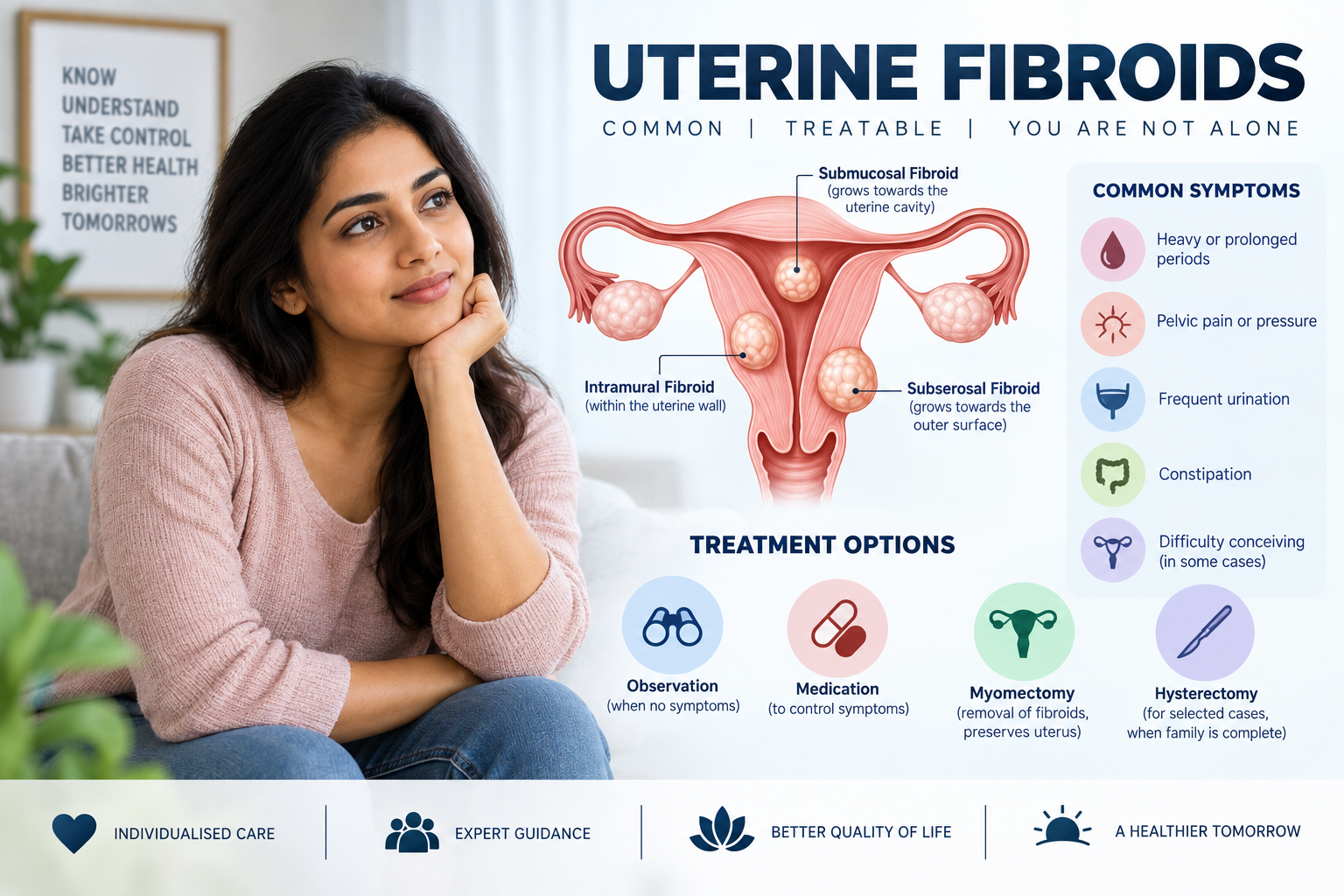
Uterine fibroids are among the most common benign growths affecting the uterus. Many women have fibroids without experiencing any symptoms, while others may have heavy periods, pelvic discomfort, pressure symptoms or difficulty becoming pregnant.
Being diagnosed with a fibroid can naturally cause concern, particularly if you are planning a pregnancy. However, most fibroids are non-cancerous, and having a fibroid does not automatically mean that you need surgery or that you will have difficulty conceiving.
The right approach depends on the size, number and location of the fibroids, your symptoms, your age and whether you are planning a pregnancy.
What are fibroids?
Fibroids, also called uterine leiomyomas or myomas, are benign growths that develop from the muscular layer of the uterus. They can occur as a single fibroid or as multiple fibroids. Their size can range from very small lesions that are only visible on ultrasound to large fibroids that can significantly enlarge the uterus.
Fibroids are broadly classified according to their location:
- Submucosal fibroids grow towards the inner cavity of the uterus.
- Intramural fibroids develop within the muscular wall of the uterus.
- Subserosal fibroids grow towards the outer surface of the uterus.
The location of a fibroid can be more important than its size when determining its effect on periods and fertility.
What causes fibroids?
The exact reason why some women develop fibroids is not completely understood.
Female reproductive hormones, particularly estrogen and progesterone, influence fibroid growth. Genetic and other biological factors also appear to play a role.
Fibroids are more commonly diagnosed during the reproductive years and may grow during pregnancy. They often shrink after menopause when hormone levels decline. Having fibroids is not caused by something a woman has done or failed to do.
What symptoms can fibroids cause?
Many women with fibroids have no symptoms at all. When symptoms occur, they may include:
- Heavy or prolonged menstrual bleeding
- Painful periods
- Pelvic pressure or heaviness
- Lower abdominal discomfort
- Increased urinary frequency
- Constipation or difficulty passing stools
- Pain during intercourse
- Abdominal enlargement
- Anaemia caused by heavy menstrual bleeding
- Difficulty conceiving in selected cases
The severity of symptoms does not always correspond to the size of the fibroid.
Fibroids and fertility
Most women with fibroids can conceive normally.
However, certain fibroids may interfere with fertility, particularly when they distort the uterine cavity. Submucosal fibroids are particularly important because they can affect implantation and may increase the risk of certain pregnancy complications. Large intramural fibroids may also affect fertility in selected women, depending on their size and location.
A fibroid found during an infertility evaluation should therefore not automatically be considered the cause of infertility. Other factors—including ovulation, ovarian reserve, fallopian tubes and sperm parameters—also need to be evaluated.
Fibroids during pregnancy
Many women with fibroids have completely healthy pregnancies.
Depending on their size and location, fibroids may occasionally be associated with pain, bleeding, placental problems, fetal growth concerns, malpresentation or an increased likelihood of certain obstetric interventions.
This does not mean that pregnancy is unsafe for women with fibroids. It simply means that some women may require closer monitoring. Your obstetrician will determine the appropriate follow-up based on the individual characteristics of your fibroids.
How are fibroids diagnosed?
Ultrasound is usually the first investigation used to identify fibroids.
A pelvic ultrasound can provide information about:
- Number of fibroids
- Size of each fibroid
- Location
- Relationship to the uterine cavity
- Uterine and ovarian anatomy
In selected cases, additional imaging such as MRI may be recommended, particularly when the anatomy is complex or detailed surgical planning is required. If heavy menstrual bleeding is present, blood tests may also be performed to check for anaemia.
Do all fibroids require treatment?
No.
A fibroid that is small, asymptomatic and not affecting fertility may simply need observation.
Treatment is considered when fibroids cause significant symptoms, affect quality of life, contribute to anaemia, distort the uterine cavity, interfere with fertility in an individual case, or create other clinically important problems. Treatment should always be individualised.
Medical treatment
Medications can help control symptoms, particularly heavy menstrual bleeding and pain.
Depending on the situation, your doctor may recommend hormonal treatments, non-hormonal medication or other medicines that temporarily reduce fibroid-related symptoms. These treatments may control symptoms without removing the fibroid. They may also be useful when surgery is not currently appropriate or when a woman is approaching menopause.
When is surgery considered?
Surgery may be recommended when fibroids cause significant symptoms or are affecting fertility or the uterine cavity.
Myomectomy is the surgical removal of fibroids while attempting to preserve the uterus. It may be performed through hysteroscopy, laparoscopy or open surgery depending on the size, number and location of the fibroids. Hysteroscopic myomectomy is particularly useful for suitable fibroids that project into the uterine cavity. The choice of procedure depends on individual anatomy and reproductive plans.
A hysterectomy, which removes the uterus, is a definitive treatment for fibroids but is generally considered only when future pregnancy is not desired and other factors make it appropriate.
Can fibroids come back after treatment?
Myomectomy removes existing fibroids, but it does not necessarily prevent new fibroids from developing in the future. Therefore, women who undergo myomectomy may occasionally develop additional fibroids later.
The decision to treat should take into account both the current problem and the woman's long-term reproductive plans.
When should you see a doctor?
Consult a gynaecologist if you experience very heavy periods, prolonged bleeding, pelvic pressure, persistent pelvic pain, symptoms of anaemia, increasing abdominal size or difficulty conceiving.
You should also seek medical assessment if menstrual bleeding suddenly becomes significantly heavier or if you experience bleeding after menopause.
The important message about fibroids
A diagnosis of fibroids does not automatically mean cancer, infertility or surgery.
Many women with fibroids require nothing more than periodic monitoring. Others benefit from medication or a carefully planned procedure.
The most important factors are where the fibroid is located, how large it is, what symptoms it is causing and whether you are planning a pregnancy.
With appropriate evaluation and personalised treatment, most women with fibroids can achieve good reproductive and long-term health outcomes.
To book a consultation with our experts in Sholinganallur, please click here to request an appointment.