
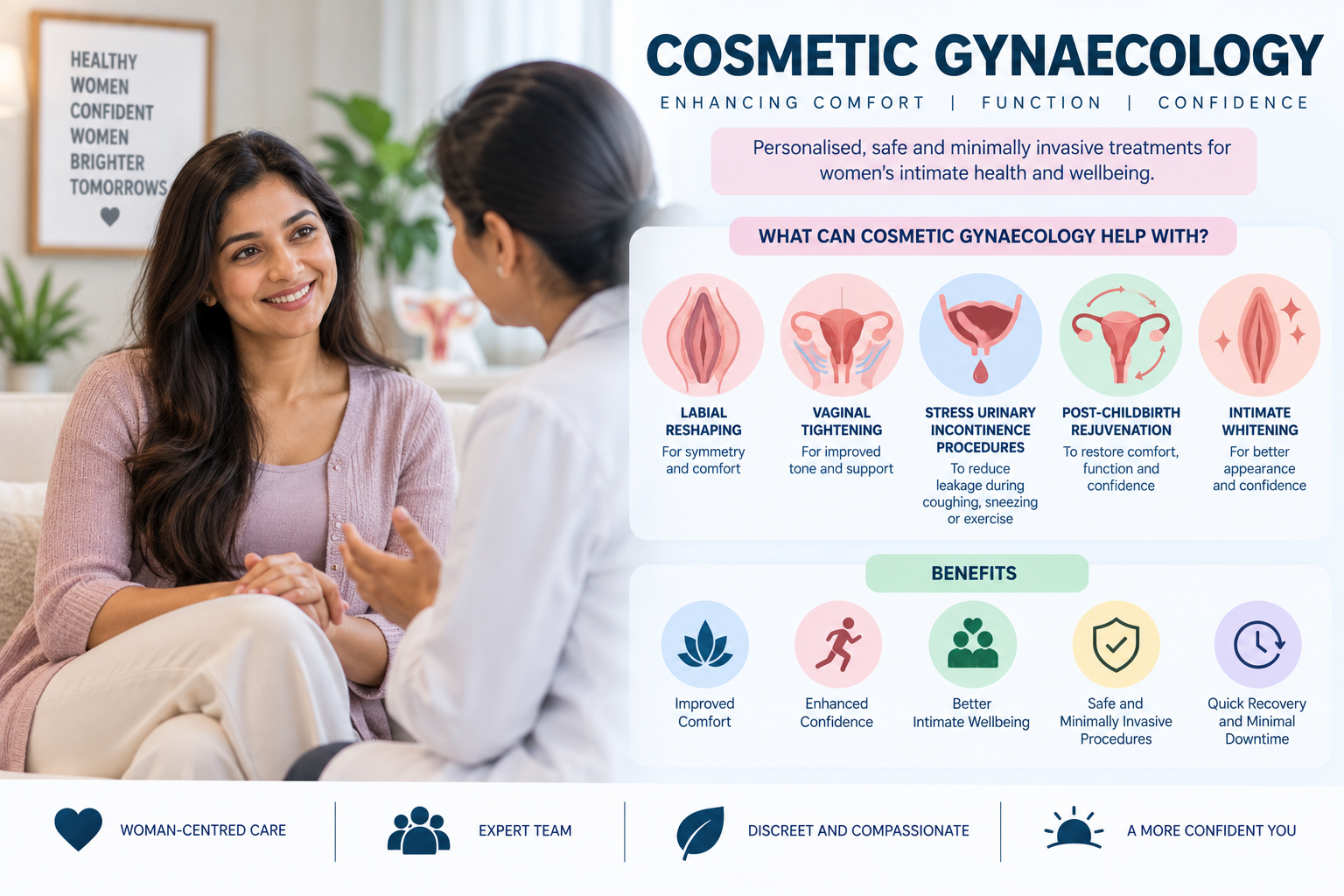
Women's bodies undergo many changes throughout life. Pregnancy, childbirth, hormonal changes, ageing and menopause can affect the vaginal area, pelvic floor and intimate tissues. For some women, these changes may cause physical discomfort, concerns about appearance, reduced confidence or difficulties with intimate wellbeing.
Cosmetic gynaecology is a broad term used to describe procedures intended to address the appearance, comfort or function of the female genital area. Some treatments are primarily cosmetic, while others aim to improve specific medical symptoms, such as discomfort from excess labial tissue or urinary leakage.
If you are considering cosmetic gynaecology, understanding the available treatments, their benefits and their limitations can help you make an informed decision.
What Is Cosmetic Gynaecology?
Cosmetic gynaecology includes selected surgical and non-surgical procedures involving the vulva, vagina and surrounding tissues. Depending on the concern, treatment may focus on reducing discomfort, improving function, addressing changes following childbirth or modifying the appearance of the external genital area.
It is important to distinguish between the vulva, which refers to the external genital structures, and the vagina, which is the internal muscular canal connecting the vulva to the cervix.
Natural variation in genital appearance is completely normal. There is no single ideal appearance, and treatment is not medically necessary simply because a woman's body looks different from images in advertisements or on social media. A consultation should focus on your symptoms, concerns, expectations and overall health.
Who May Consider Cosmetic Gynaecology?
Women may seek advice for several reasons, including:
- Discomfort or irritation caused by prominent labial tissue
- Changes in vaginal sensation or pelvic floor function after childbirth
- Urinary leakage during coughing, sneezing or exercise
- Scarring or discomfort following childbirth
- Concerns about the appearance of the vulva
- Vaginal dryness or discomfort associated with hormonal changes
Not every concern requires a procedure. In many cases, pelvic floor physiotherapy, medication, moisturisers, lubricants or other non-surgical treatments may be more appropriate. The first step is to identify the underlying problem rather than choosing a procedure based on a particular treatment trend.
Common Cosmetic Gynaecology Procedures
1. Labiaplasty
Labiaplasty is a surgical procedure that reshapes the labia, usually the labia minora. Some women consider it because enlarged or asymmetrical labia cause discomfort during exercise, cycling, intercourse or when wearing tight clothing. Others seek treatment because of concerns about appearance.
Labiaplasty may help selected women with persistent physical discomfort. However, it involves surgery and carries risks such as bleeding, infection, scarring, altered sensation, persistent pain and dissatisfaction with the result. A detailed consultation should explore whether the concern is functional, cosmetic or both. Natural asymmetry and variation in labial size are common and do not automatically require treatment.
2. Vaginal Laxity and Pelvic Floor Treatment
Some women notice changes in vaginal sensation or pelvic floor support following childbirth or with ageing. The term vaginal laxity can describe different experiences and does not always indicate a structural abnormality.
Pelvic floor muscle training and physiotherapy are often useful first-line approaches, particularly when weakness or reduced muscle coordination is involved. For selected women with significant anatomical changes, a gynaecologist may discuss surgical options. Procedures sometimes marketed as vaginal tightening should be evaluated carefully because the benefits and risks vary.
Laser and radiofrequency treatments are also advertised for vaginal rejuvenation, but evidence for many claimed benefits remains limited. They should not be assumed to provide permanent tightening or improve sexual function.
3. Treatment for Urinary Leakage
Urinary leakage during coughing, sneezing, laughing or exercise is known as stress urinary incontinence. Although it can occur after childbirth or with ageing, it is not something women simply have to accept.
Treatment depends on the type and severity of incontinence. Options may include pelvic floor muscle training, lifestyle changes, selected medical treatments and, when appropriate, surgical procedures. The important point is that urinary incontinence is a medical condition, not merely a cosmetic concern. A proper assessment helps identify the most effective treatment.
4. Post-Childbirth Intimate Concerns
Childbirth can cause perineal tears, scars, pelvic floor weakness and changes in vaginal comfort. Women experiencing these symptoms should undergo an assessment to determine whether the problem relates to healing, scar tissue, pelvic floor dysfunction, prolapse or another condition.
Treatment may include physiotherapy, scar management, medication or selected surgical procedures. Not every woman needs vaginal rejuvenation after childbirth. The decision should be based on actual symptoms and clinical findings rather than pressure to regain a particular appearance.
5. Vulval Pigmentation and Intimate Skin Concerns
The colour of the vulva naturally varies between individuals and may change with hormones, ageing and friction. Darker pigmentation is often normal and does not indicate poor hygiene.
Treatments marketed as intimate whitening may cause irritation, burns, scarring or pigment changes, particularly when inappropriate chemicals or energy-based devices are used on sensitive tissue. If pigmentation changes suddenly, becomes irregular or is associated with itching, pain or sores, a medical examination is advisable before considering any cosmetic treatment.
What Happens During a Consultation?
Your first appointment should provide an opportunity to discuss your concerns privately and without embarrassment. Your gynaecologist may ask about your symptoms, previous pregnancies, childbirth injuries, menstrual or menopausal status, medical conditions, medications and treatment expectations.
An examination may be recommended when clinically appropriate and with your consent. Your doctor will explain the available options, expected benefits, possible complications, recovery time and alternatives. You should have sufficient time to ask questions and make a decision without pressure.
In some cases, the most appropriate recommendation may be to avoid a procedure altogether.
Is Cosmetic Gynaecology Safe?
Safety depends on the procedure, the patient's health, the practitioner's qualifications and the clinical setting. Surgical procedures carry risks that may include bleeding, infection, scarring, altered sensation, persistent discomfort and the possibility of further treatment.
Non-surgical treatments are not automatically risk-free. Energy-based devices and injectable treatments may have complications, and evidence supporting some marketed applications is limited. Choose a suitably qualified gynaecologist who can explain the evidence, discuss realistic outcomes and manage complications if they occur.
Be cautious of promises of guaranteed results, permanent rejuvenation or dramatic improvement in sexual satisfaction.
Recovery and Results
Recovery varies considerably depending on the treatment. After surgery, you may need time away from work, exercise and sexual activity. Your doctor will provide specific instructions about wound care, hygiene, pain management and follow-up.
Results also vary. Some procedures can address a clearly identified physical problem, while others may not deliver the appearance or functional changes a patient expects. Before proceeding, make sure you understand what the treatment can realistically achieve and whether its potential benefits justify the risks.
The Importance of Informed Choice
Decisions about intimate health are personal. Women should feel comfortable discussing their concerns without shame, pressure or unrealistic expectations.
Cosmetic gynaecology should never be presented as a requirement for attractiveness, femininity, a satisfying relationship or sexual fulfilment. The best treatment is one that addresses a genuine concern, has a reasonable evidence base, and aligns with the woman's own informed preferences.
Taking the Next Step
If you are experiencing intimate discomfort, changes following childbirth, urinary leakage or concerns about genital appearance, a consultation with a qualified gynaecologist can help you understand the cause and explore appropriate options.
At MA Pregnancy & Fertility Clinic, Chennai, women's health concerns deserve sensitive, confidential and individualised attention. The focus should always be on your comfort, wellbeing, safety and informed decision-making. Remember, every woman's body is different. You deserve care that respects those differences and helps you make choices that are right for you.